Hooked
4 stages of Hooked products: Trigger, Action, Variable Reward, Investment
Trigger
External Trigger
Implies the user by issuing a call to action. This is the first step in building habit-forming technology. Anything around us can serve as a call to action.
The more choices you give users, the longer they take to weigh them. Too many irrelevant options will make their thoughts drift.
Paid Trigger
Advertising, promoting through search engines.
Earned Trigger
Positive media coverage, popular online videos, featured recommendations in app stores.
The resulting sales and clicks often make companies blindly optimistic, thinking that this is a success, but it is not. Users brought by earned triggers are often fleeting.
Relationship Trigger
Mutual recommendations from acquaintances are extremely effective external triggers.
Relationship triggers can also cause the "viral spread" that business operators and investors desire.
Owned Trigger
Appears consistently every day, realizing the user's final recognition of the product.
Owned triggers only take effect when the user has already registered an account, submitted an email address, installed an app, or selected a newsletter.
Internal Trigger
Habit-forming products can soothe specific emotions. Dig deep into the user's internal emotional experience.
Installation Trigger
Erika Hall wrote in the book "Just Enough Research": "Only when your research focuses on people's actual behavior (watching videos about cats) rather than their inner vision (shooting home videos with cinema effects) will you discover more possibilities." Contradiction or conflict also represents opportunity. Why do people send text messages? Why take photos? What role do watching TV shows or sports games play in people's lives? Reflect on what troubles these behaviors can eliminate? What feelings will they create for users? What purpose do users expect to achieve with your product? When and where will they use this product? What emotions will prompt them to use the product and trigger action?
The Five Whys
- Why does Julie need to use email? Answer: To send and receive messages.
- Why does she want to send and receive messages? Answer: To share and get information instantly.
- Why does she want to share and get information? Answer: To understand the lives of her colleagues, friends, and family.
- Why does she want to understand the lives of others? Answer: To know if she is needed by others.
- Why does she care about this? Answer: Because she is afraid of being abandoned by the circle.
Now we have the answer! Fear is the most powerful internal trigger in her. Therefore, when designing products, we should consider making it alleviate the user's fear.
Action
Action taken in anticipation of a reward.
Ability is more important than motivation
Which aspect should you solve first? Motivation or ability? Which choice is more worthy of your time and money?
The answer is always: Solve the ability problem first.
Of course, to make a single user behavior a reality, none of the elements in the formula B=MAT can be missing. Without a clear trigger and strong motivation, user behavior cannot happen. But for technology companies, whether they can get a substantial return on investment often depends on whether they can improve the ease of use of the product. The reality is that enhancing user motivation is often time-consuming and costly. People visiting websites rarely read the website guides above. Their attention will be immediately scattered to several tasks, and they have no patience to learn from those explanatory texts why they should enter this website and how to use it. Instead, you should simplify the operation process and push them to practice, which is far more effective than strengthening their motivation and whetting their appetite. To win hearts, you must first make your product convenient and easy to operate, so that users can easily master it.
Variable Reward
Fogg Behavior Model
Fogg believes that three elements are essential to get people to act.
- First, sufficient motivation;
- Second, the ability to complete this behavior;
- Third, a trigger to prompt people to take action.
The Fogg Behavior Model can be presented by the formula B=MAT. B stands for Behavior, M stands for Motivation, A stands for Ability, and T stands for Trigger. To make people complete a specific behavior, motivation, ability, and trigger are indispensable. Otherwise, people will not be able to cross the "Action Line", that is to say, they will not implement a certain behavior.
There are no more than three core motivations that drive us to take action.
- Seek pleasure, avoid pain
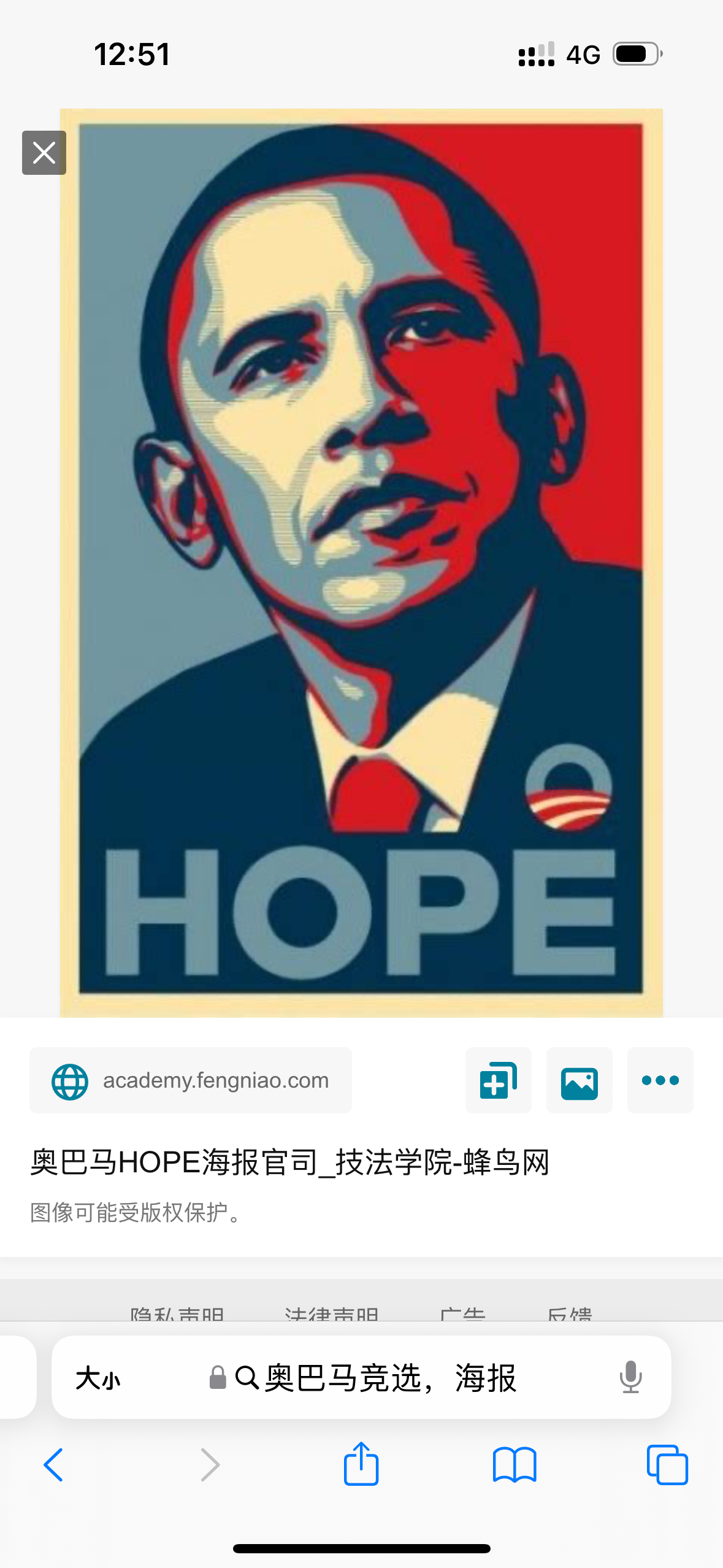
- Seek hope, avoid fear
- Seek social acceptance, avoid rejection
Everyone's actions are influenced by these three groups of core motivations.
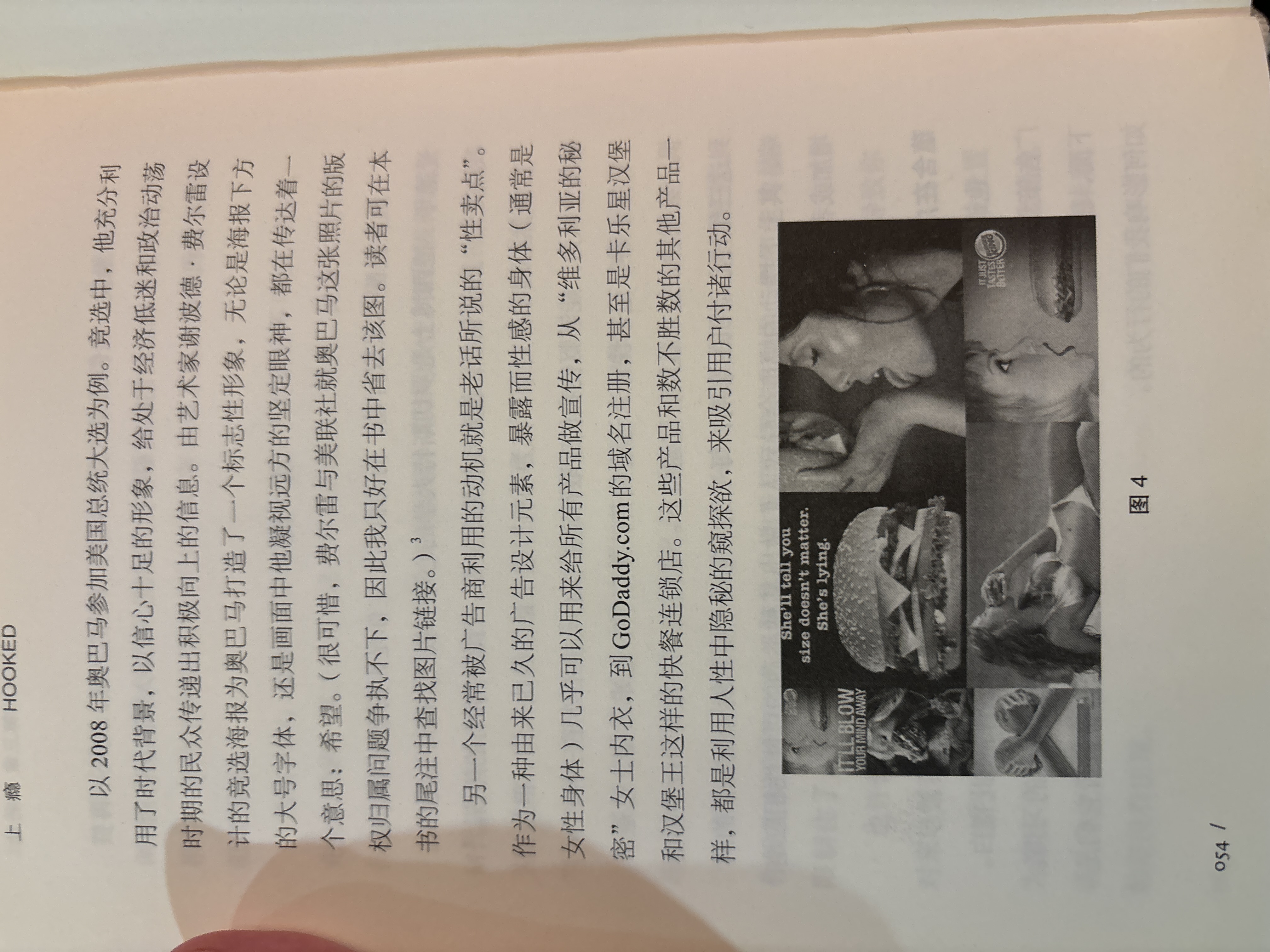
Sex Appeal
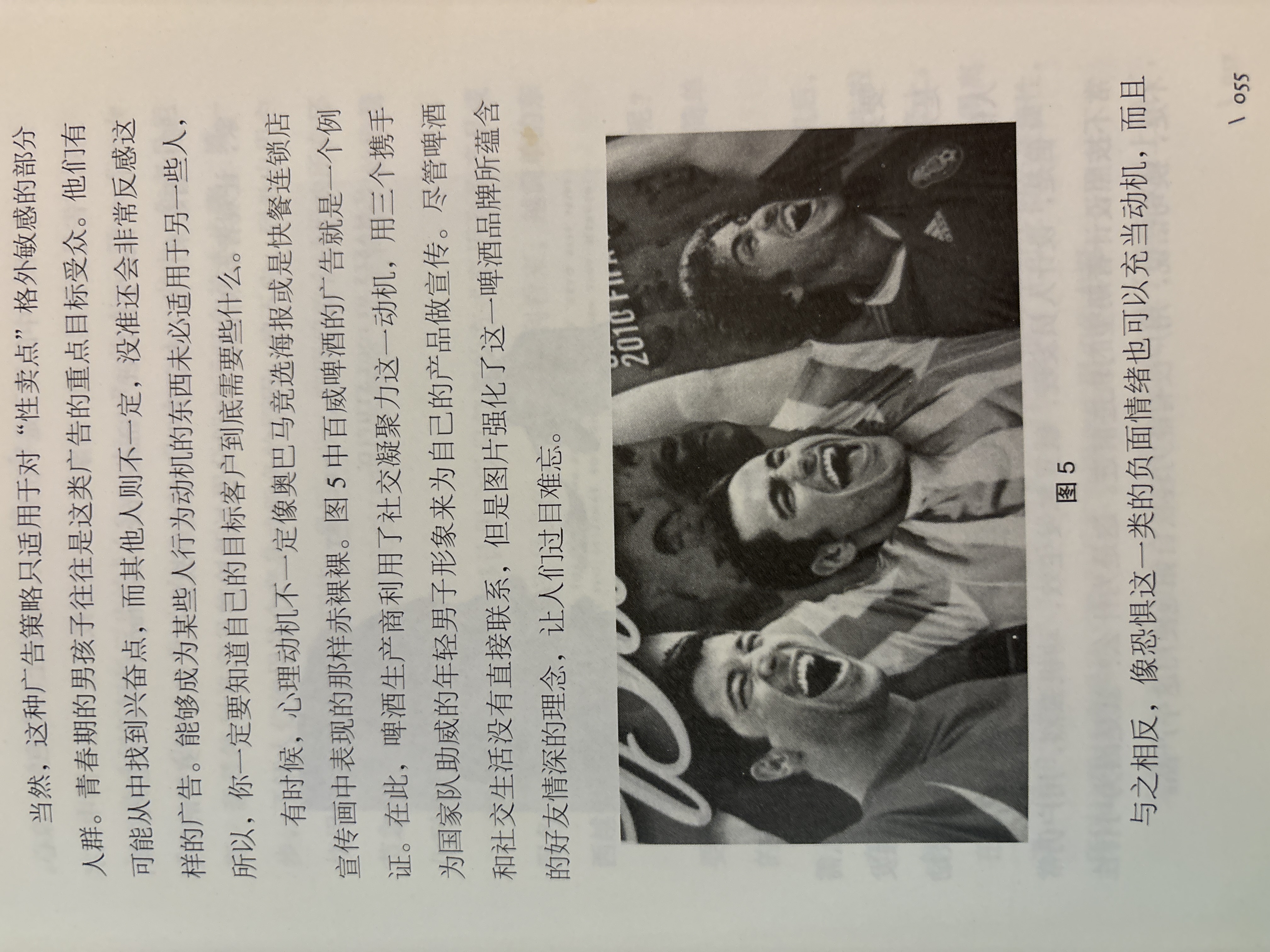
Social Cohesion
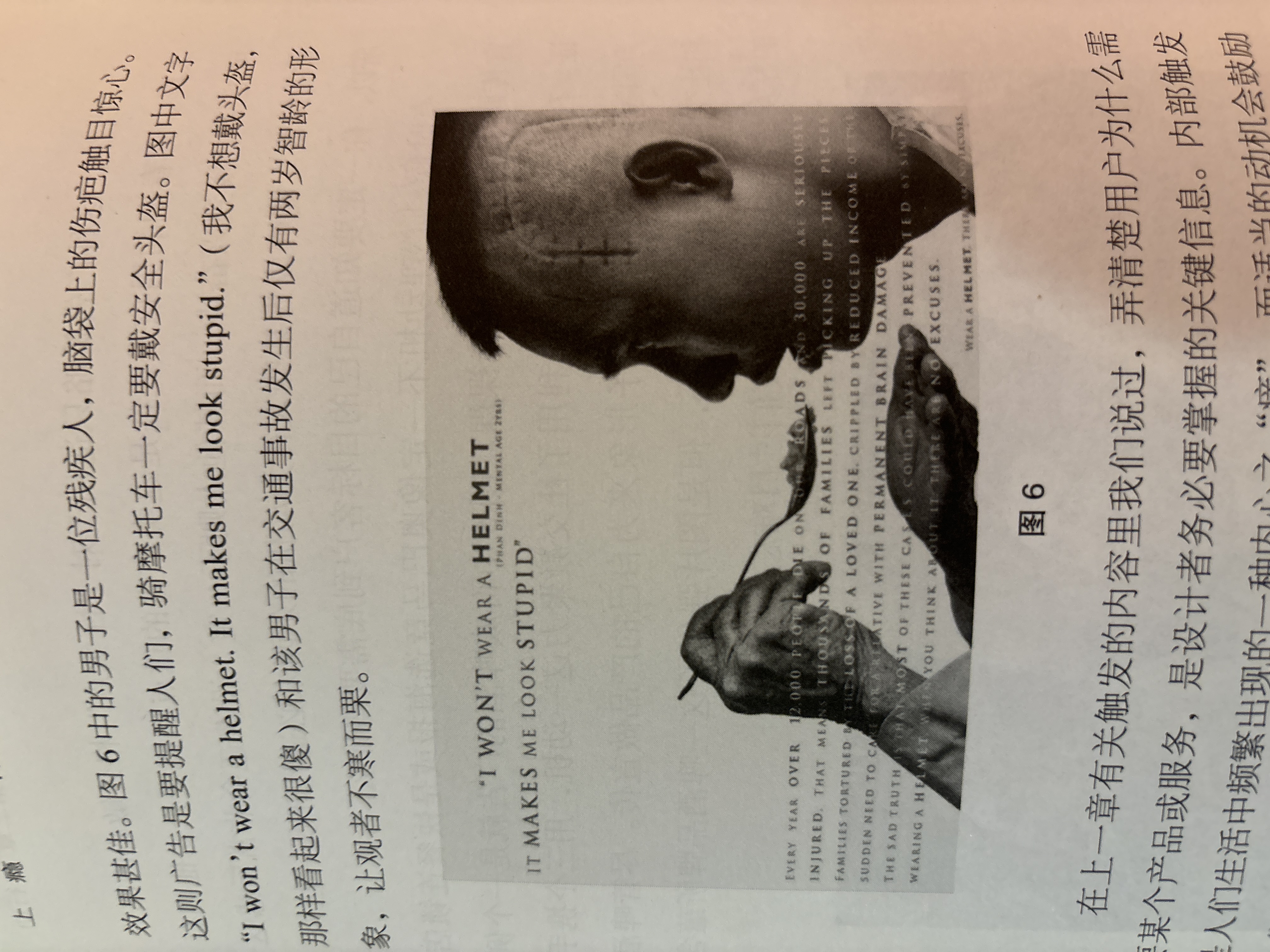
Fear
In other words, advertising, its core is talking to the user's inner primal desires.
Three Simple Steps to Innovation
In the book "Something Really New: Three Simple Steps to Creating Truly Innovative Products", author Denis J. Hauptly breaks down the product innovation process into three basic steps.
- Step one, understand the reasons why people use a certain product or service.
- Next, list the necessary steps for users to use the product.
- The last step, after clarifying all the links in the entire process, start subtracting, delete all irrelevant links, until the usage process is simplified to the extreme.
So it seems that any product or service that allows users to enjoy it in the simplest way must have the highest user usage rate. In Hauptly's view, the simpler the thing, the more popular it is.
6 Elements of Simplicity
Fogg summarized the 6 elements contained in simplicity, that is, the 6 elements that affect the difficulty of a task, they are:
- Time - The time required to complete this activity.
- Money - The financial investment required to engage in this activity.
- Physical Effort - The physical effort required to complete this activity.
- Brain Cycles - The mental effort required to engage in this activity.
- Social Deviance - The acceptance of this activity by others.
- Non-Routine - According to Fogg's definition, "the degree of match or contradiction between this activity and routine activities".
Rewards of the Hunt
Rewards of the Hunt. The need for specific items - such as food and daily necessities - is one of the most basic human needs. It's just that in modern society, money can buy food, and what's more, information can also be converted into money, so food is no longer the target we hunt for, replaced by other things. Long before computers came out, people had already begun to get rewards from prey.
But today, we can see countless examples related to the "Rewards of the Hunt" psychology. People chase resources, chase information, with a persistence no less than hunters chasing prey.
Rewards of the Self
Cultivation task type. Like email games. leetcode
The concept of "gamification" has been applied to different fields and has achieved corresponding success. People refer to "the application of game elements in non-game environments". Similar to: points, badges, leaderboards and other gamification elements.
"You have the right to accept, and you also have the right to refuse."
Investment
This stage helps to increase the frequency of users re-entering the Hooked loop.
User registration, following, and adding content to favorites are all forms of investment.
"IKEA Effect"
People who have put in labor will attach more value to their origami works. Ariely calls this phenomenon the "IKEA Effect".
IKEA lets customers assemble furniture themselves.
LinkedIn found that the more information users input into the website, the higher the frequency of their visits to the website.
As Josh Elman, an early senior product manager at LinkedIn, told me: "If we can get users to enter even a little bit of information, they are more likely to become repeat customers." As long as it relates to providing more user data, even a little effort will create a powerful hook to firmly hook people back into the service.
Others
When the brain tries to take shortcuts and no longer actively thinks about what to do next, a habit is formed.
Habit-forming products can change users' behavior so that they engage in certain activities without external triggers. The goal is to make users consciously get close to the product again and again without explicit calls to action such as advertising and external promotions.
When building habit-forming products, two factors need to be considered: frequency and perceived utility.
- Frequency: How often does this behavior occur
- Perceived utility: What extra uses and benefits does this product have compared to other products in the user's mind
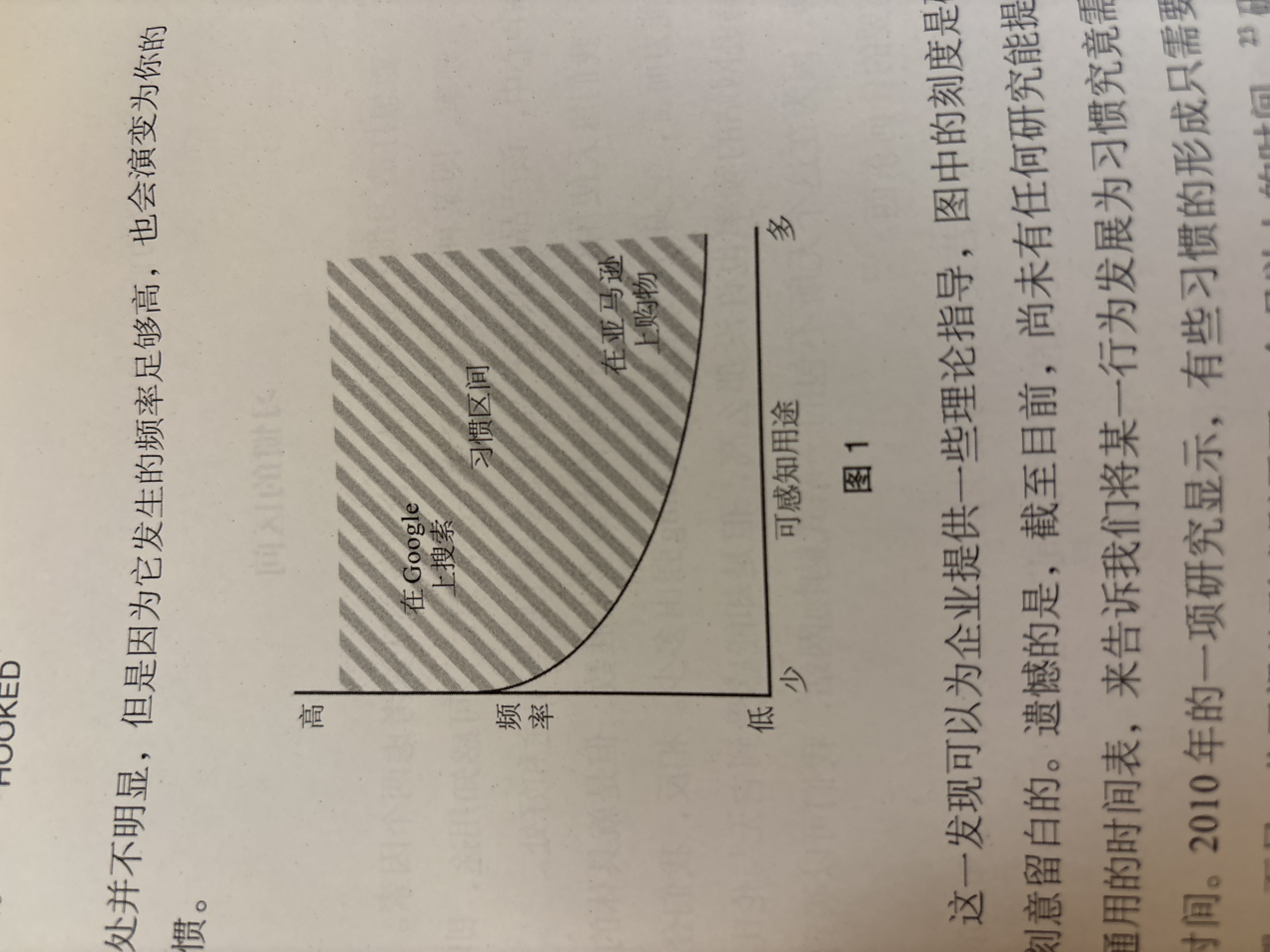
The higher the frequency, the greater the possibility of evolving into a habit.
All successful innovations: solve problems.
If you feel pain because you cannot perform a certain behavior, it means your habit has been generated.
Actually, the experience we want to describe is closer to an "itch". It is a craving lurking in our hearts. When this craving is not met, discomfort will appear.
The "services" provided by technology companies are more like vitamins that add icing on the cake in the early stages, but once they become part of users' daily lives, they will be like painkillers soothing the "itch" in people's hearts.
The original intention of product designers is to help users solve problems and eliminate troubles. In other words: it is to scratch their "itch". When users find that this product helps alleviate their troubles, they will gradually establish a solid and positive connection.
Case: When Ying sees something she thinks is worth paying attention to, a need arises in her heart, and Instagram is the most direct way to satisfy this need.
The purpose of the Hooked Model is to connect the user's problem with the designer's solution to help the user form a habit.
This model is a framework for developing products. The products developed can solve user needs through long-term user participation, mainly to scratch the user's itch.
Use the Hooked Model to ask yourself five basic questions about how to get users hooked:
- What do users really need? What pain can your product alleviate? (Internal Trigger)
- What do you rely on to attract users to use your service? (External Trigger)
- When expecting a reward, what is the simplest action a user can take? How to simplify the product to make this action easier? (Action)
- Are users satisfied with the rewards they get, or do they want more rewards? (Variable Reward)
- What "bit by bit investments" have users made to your product? Do these investments help load the next trigger and store value, improving product quality during use? (Investment)
The Hooked Model is basically about changing people's behavior patterns.
If you don't know your users like the back of your hand, the probability of designing a successful product is depressingly low. Peddlers often fail to empathize with users and lack the necessary insight, so they cannot develop products that users really want. Usually, the peddler's efforts will be in vain because the designer lacks sufficient understanding of their users, and the result is that no one recognizes the function of their product.
Entertainment is a business dominated by fashion. Faced with stimulation, the brain's reaction is the more the better, always full of desire for endless new things. Building a career on the basis of fleeting desires is like running on a treadmill that never stops: you must keep up with the changing needs of your users. In this quadrant, sustainable business is not just commodities like games, songs or books. Profits come from an effective distribution system that brings these commodities to market when they are still hot, while ensuring that the product supply line is stocked with plenty of fresh products to meet the needs of eager users.
I encourage you to align with a goal in your work that should make your work meaningful and also make others' lives meaningful. This is not only a moral obligation but also a good business practice.
Entrepreneurship is extremely arduous, and only the luckiest entrepreneurs can stick to it until success. If entrepreneurship is only for fame and fortune, it is very likely that neither will be obtained. If entrepreneurship is for meaning, then it is impossible to fail.
"Habit Testing". This process is inspired by the "Build-Measure-Learn" method advocated by the Lean Startup movement. "Habit Testing" can provide profound insights and ready-to-use data for habit-forming product design. It helps clarify the following questions:
Who are the fans of your product?
Which parts of your product are easy for users to form habits (if any)?
Need at least 5% of users to be habituated to the website.
Why do these features of your product change user behavior?
Finding Opportunities
Careful reflection can reveal some opportunities to develop habit-forming products. At the beginning of the day, ask yourself: Why do some things need to be done, and why do others not? How can these tasks be made simpler or more valuable? Observing your own behavior can bring inspiration for developing the next generation of habit-forming products, or bring breakthrough improvements to existing solutions.
Below are other sources prone to innovation opportunities - consider them as shortcuts to discover mature existing behavior patterns and achieve successful business development based on forming new user habits.
Whenever there is a huge change in the way people interact with technology, there will be a large number of excellent opportunities waiting for you to grasp. Interface changes suddenly make various behaviors easier. Subsequently, when the effort required to complete a task becomes less and less, the application volume of this technology will explode.
A change in the interface can clearly show us that the long history of technology companies creating wealth is the history of finding user patterns. A new interface makes a behavior easier, and also lets us see the surprising truth about user behavior.
- The Hooked Model helps product designers set an initial standard for habit-forming technologies, and also helps discover hidden weaknesses from the habit-forming potential of existing products.
- Once the product is developed, "Habit Testing" helps identify product fans, find out which product factors help users form habits (if any), and figure out why these aspects of the product change user behavior. Habit testing includes three steps: identify users, analyze user behavior, and improve the product.
First, delve into the data to determine how people behave and use the product.
Second, analyze these findings to find habituated users. To draw new inferences, study the behavior and habit paths of loyal users.
Finally, improve the product to attract more users to follow the path taken by habituated users, then evaluate the results and continue to modify as needed.
Keen observation of your own behavior may bring new insights and opportunities to create habit-forming products.
In some fields, new technologies will make the cycle in the Hooked Model faster, more frequent, or the cycle process more valuable. Finding these fields can provide excellent opportunities for developing new habit-forming products.
Nascent behaviors - new behaviors that few people see or do, but will ultimately satisfy mass market demand - can bring breakthrough habit-forming opportunities for the future.